Mark Douglas is a Maritime Domain Analyst and Naval Reserve Officer who bridges the gap between commercial intelligence and national security.
Drawing on a career as a Naval Officer in the Royal New Zealand Navy, with roles at sea and ashore in New Zealand, the United Kingdom, and Singapore, Mark applies military-grade rigour to the open-source world. He specialises in the operational and strategic implications of the "Shadow Fleet," providing high-level counsel on sanctions evasion, maritime security, and risk mitigation.
His analysis is a primary resource for investigations by Bloomberg and The Insider, and informs the policy debate on maritime enforcement.
Global Exclusives & Major Investigations
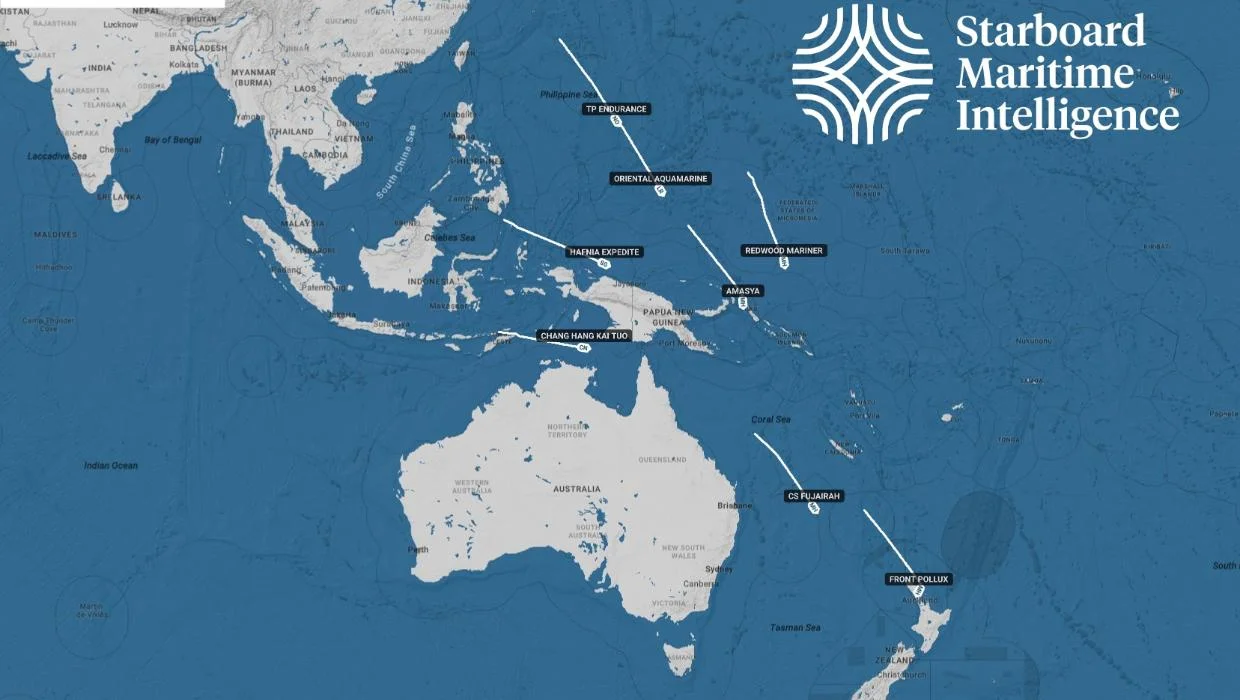
Pacific Flags being falsely used by the shadow fleet
Published in Opinio Juris, this analysis explores the legal and operational friction caused by Russia’s "shadow fleet" in the Baltic Sea. It uses the May 2025 interception of the tanker Jaguar to illustrate how coastal states can navigate the constraints of UNCLOS to counter illicit maritime activity. By distinguishing between legitimate freedom of navigation and the legal vulnerabilities of "stateless" vessels using spoofed AIS, the article provides a critical framework for enforcement. It establishes a precedential argument for interdicting high-risk tankers, offering a replicable model for maritime security agencies facing similar hybrid threats globally.
Published in Marine Professional following a series of cable disruptions in the Baltic Sea, this article addresses the critical vulnerability of global undersea infrastructure. It critiques the current reliance on episodic naval patrols (such as NATO's Baltic Sentry) as expensive and operationally limited.
The piece proposes a new "layered defence" model that bridges the gap between private sector ownership and public sector authority. By creating a shared maritime intelligence picture—fusing commercial data, satellite monitoring, and acoustic sensors—cable operators can provide persistent early warning while governments retain the capacity for escalation.
Published in Marine Professional, this analysis connects the operational precedent set by Estonia’s interception of the Kiwala to the complex maritime environment of Southeast Asia, arguing that Baltic enforcement tactics offer a viable model for nations like Malaysia. By contrasting the strictures of transit passage in the Singapore Strait with the broader rights to interdict stateless vessels in territorial waters, the article challenges regional actors to shift from passive observation to active policing. It concludes that while confronting the "dark fleet" carries diplomatic friction, the physical risks of inaction—demonstrated by recent collisions and explosions—now necessitate a policy shift where coastal states use existing UNCLOS provisions to set the terms of engagement in their own waters.
Published in Marine Professional, this article highlights a critical operational vulnerability in the Straits of Malacca and Singapore (SOMS), shifting the security focus from the bridge to the engine room. Analyzing ReCAAP data, the piece identifies a specific trend where perpetrators target high-value engine spares, disproportionately exposing engineering personnel to violent confrontation. It argues that while regional patrols provide external deterrence, ship operators must address the "internal" threat landscape by hardening access to machinery spaces, effectively protecting the technical crew who—unlike bridge staff—often find themselves on the unprotected front line of sea robberies.
Media & Investigative Commentary
January 2026
Exclusive: Pacific Flags being falsely used by the shadow fleet
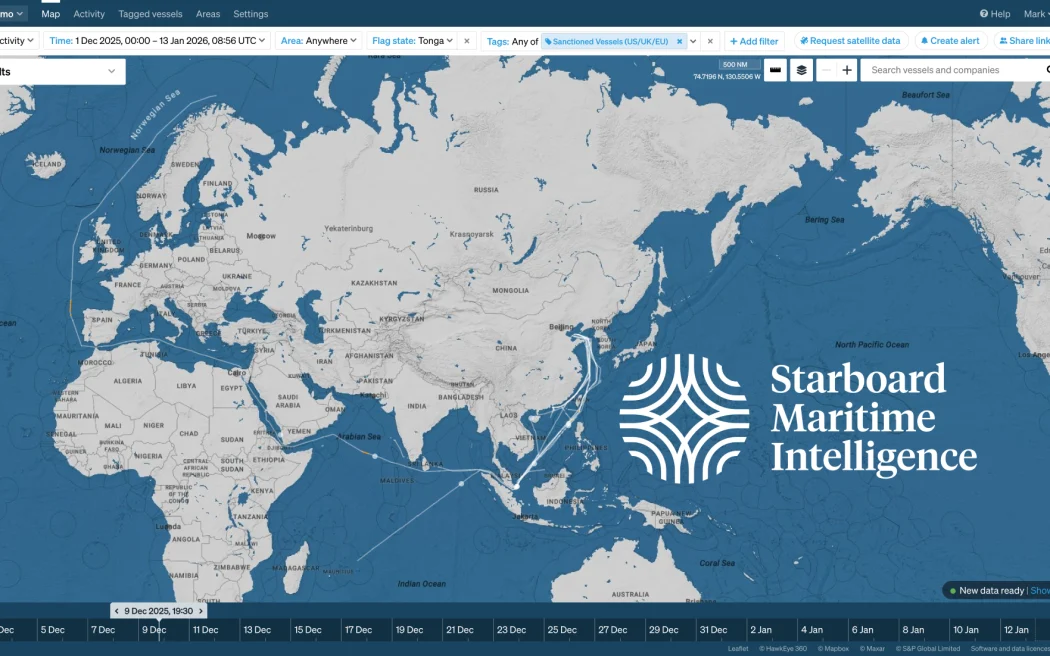
Starboard Maritime Intelligence said they have tracked 10 "shadow fleet" vessels falsely flying the flag of Tonga. Graphic shows tracking over a period of time between 1 December 2025 and 13 January 2025.
Starboard analyst Mark Douglas told RNZ Pacific it would be highly unusual for Tonga to flag oil tankers, given their ship registry closed all the way back in 2002.
"It's just not something that Tonga is known for doing.... if they don't have insurance and they're not well maintained, if there's an accident it would be in the hands of the flag state to fix that problem," he said.
"Tonga is obviously not wanting to deal with this problem, but somebody's trying to pretend that they do."
Douglas said the vessels tracked through a Malaysian port at East Johor, which according to reporting by Bloomberg last year was a notorious place for Iranian crude oil to be rebranded] as Malaysian, before being exported to China.
At the time, there was more crude oil being exported from Malaysia to China than what Malaysia was actually producing, Bloomberg reported.
Another, Douglas said, had made it to the Norwegian Sea headed for Russia.
The majority of the vessels are crude oil carriers that appear to be operating between Iran and China, with the vessels loading Iranian crude in the Persian Gulf before conducting ship-to-ship transfers and other movements designed to hide the true origin of the oil before unloading it in China, said Mark Douglas, maritime domain analyst with Starboard Maritime Intelligence in New Zealand.
"These tankers normally take on false flags in order to continue trading after being removed from other flags, normally due to sanctions violations," Douglas told DW.
Crews interfering with Automatic Identification System
Under modern maritime law, ships are assigned numbers used by the Automatic Identification System (AIS), which allows authorities to trace them and reduces the possibility of collision.
"Of the 29 tankers identified as falsely using the Tongan or Cook Island flag, 21 are sanctioned and another two are transmitting invalid AIS numbers, which makes checking their sanction status more difficult," according to the analyst.
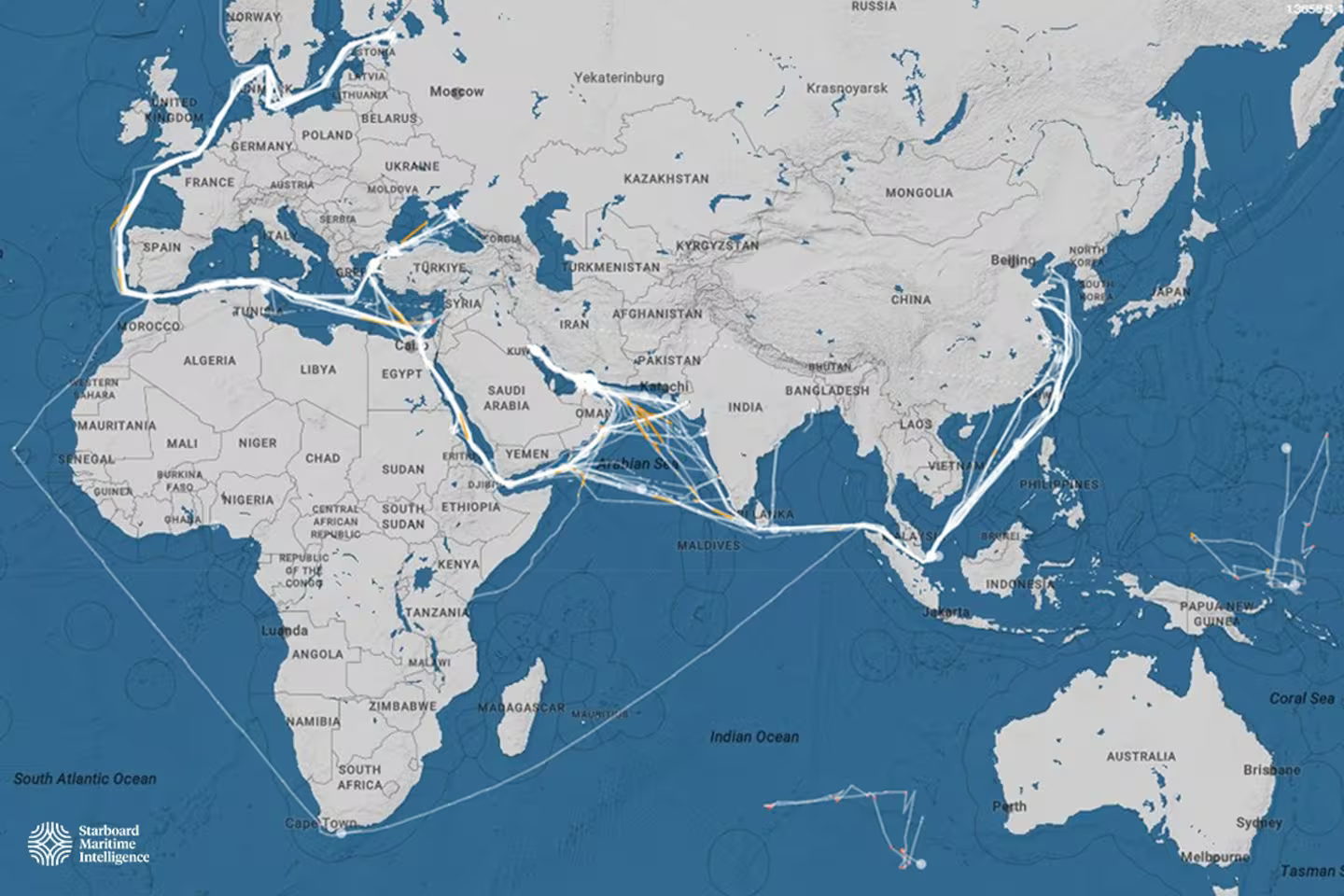
“The sight of that many vessels operating in concert is staggering,” said Mark Douglas, an analyst at Starboard, a company with offices in New Zealand and the United States. Mr. Douglas said that he and his colleagues had “never seen a formation of this size and discipline before.”
“The story is really a persistent, global reflagging of dark-fleet tankers,” said Mark Douglas, a maritime domain analyst at Starboard Maritime Intelligence. “It’s unlikely to stop at this number.”
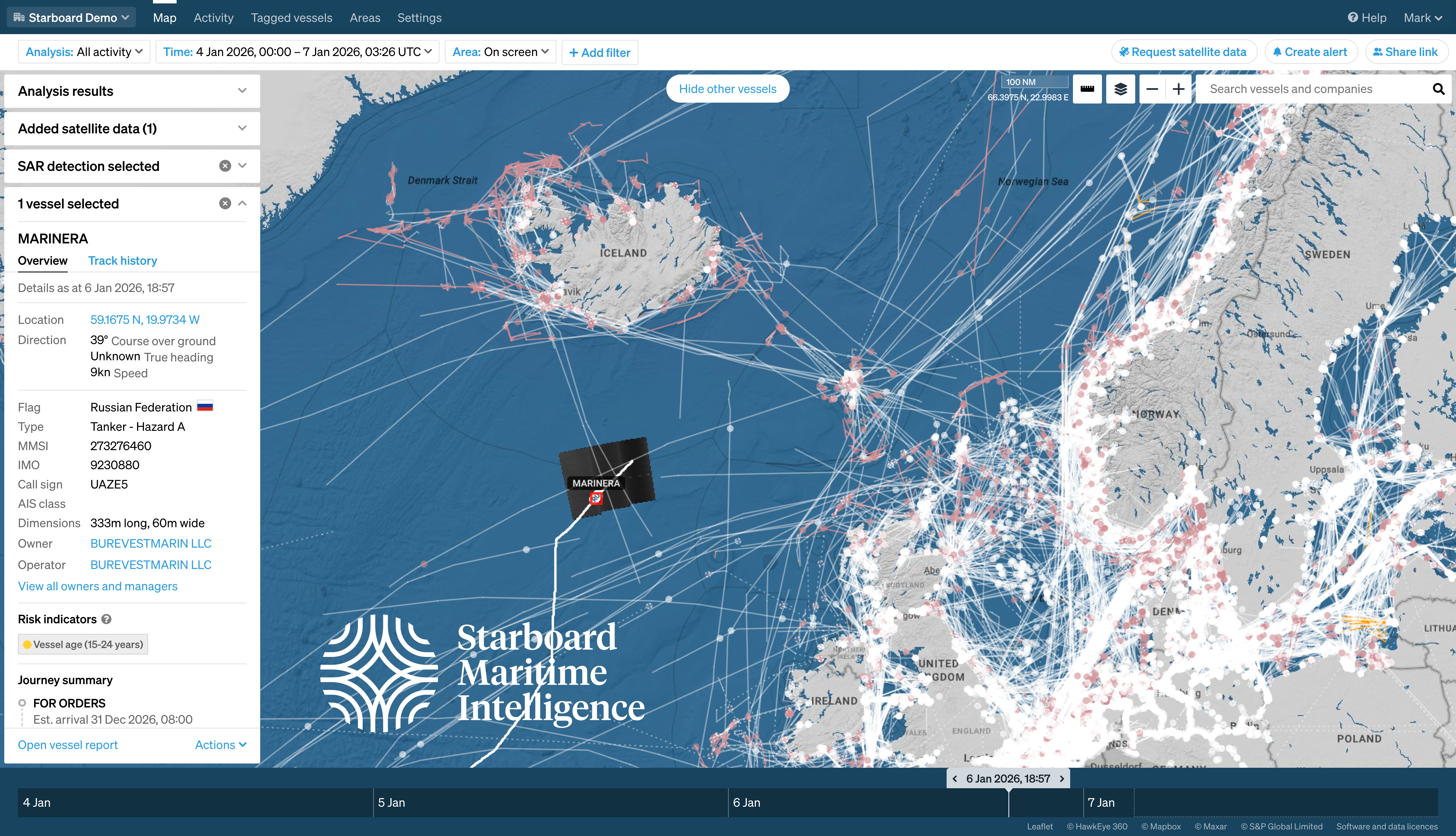
Mark Douglas, of Starboard Maritime Intelligence, told The i Paper that an increase in sea ice has closed the northern passage along Russia’s Arctic coast, meaning many more vessels are expected to take the route around UK waters.
He added: “The fact that 50 such vessels continue to operate is a concern, not just for the continued flow of oil and other goods to feed Russia’s illegal invasion of Ukraine, but also the risk that these vessels travelling – which are often old and lack proper management and oversight – pose to critical maritime and underwater infrastructure and the environment.”
“Reflagging to Russia is increasingly being used by these tankers to allow them to continue operating and gain some sort of legitimacy and protection,” said Mark Douglas, a maritime analyst with Starboard Maritime Intelligence.
December 2025
Exclusive: PLA(N) Flotilla in the Philippine Sea
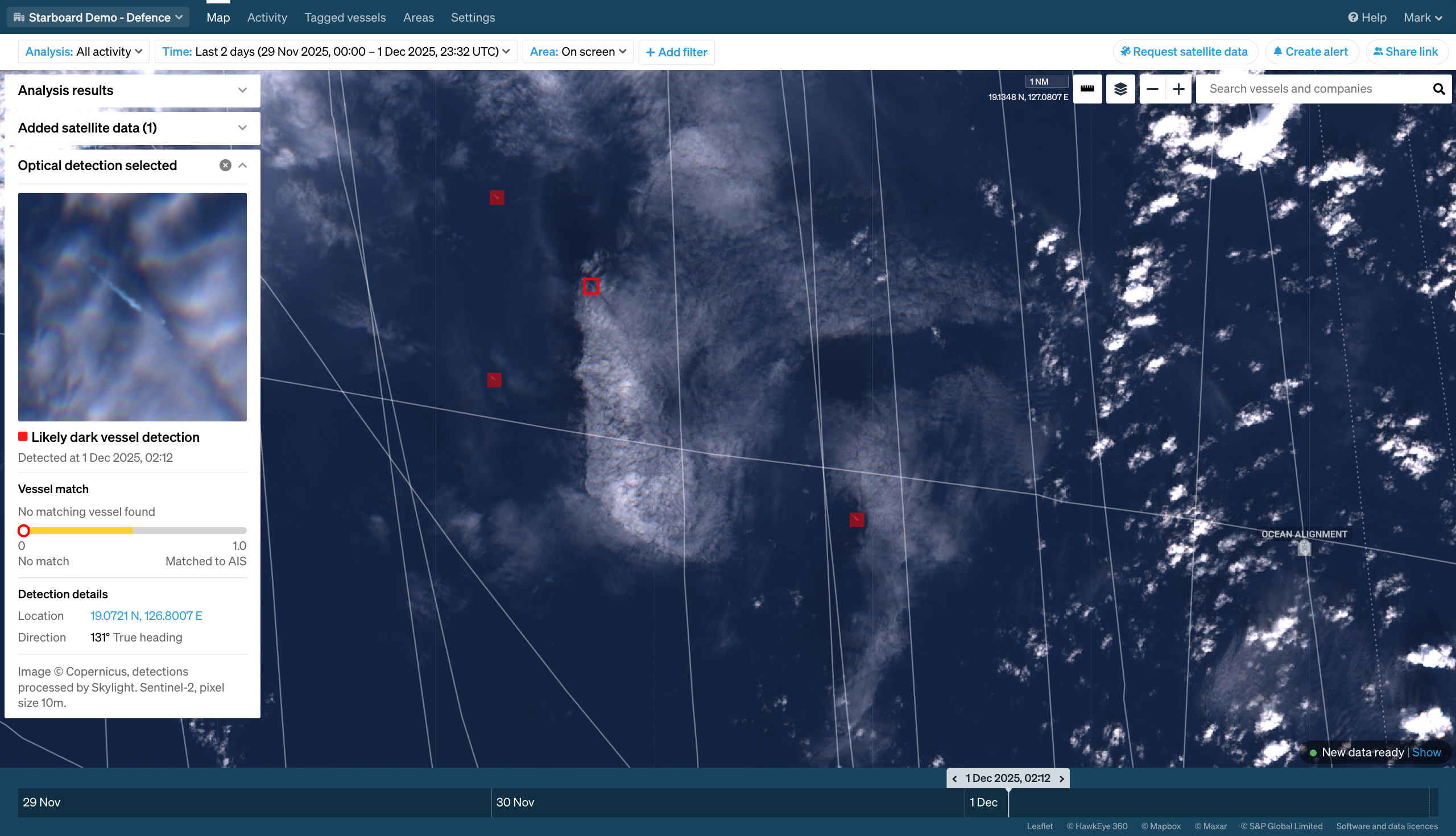
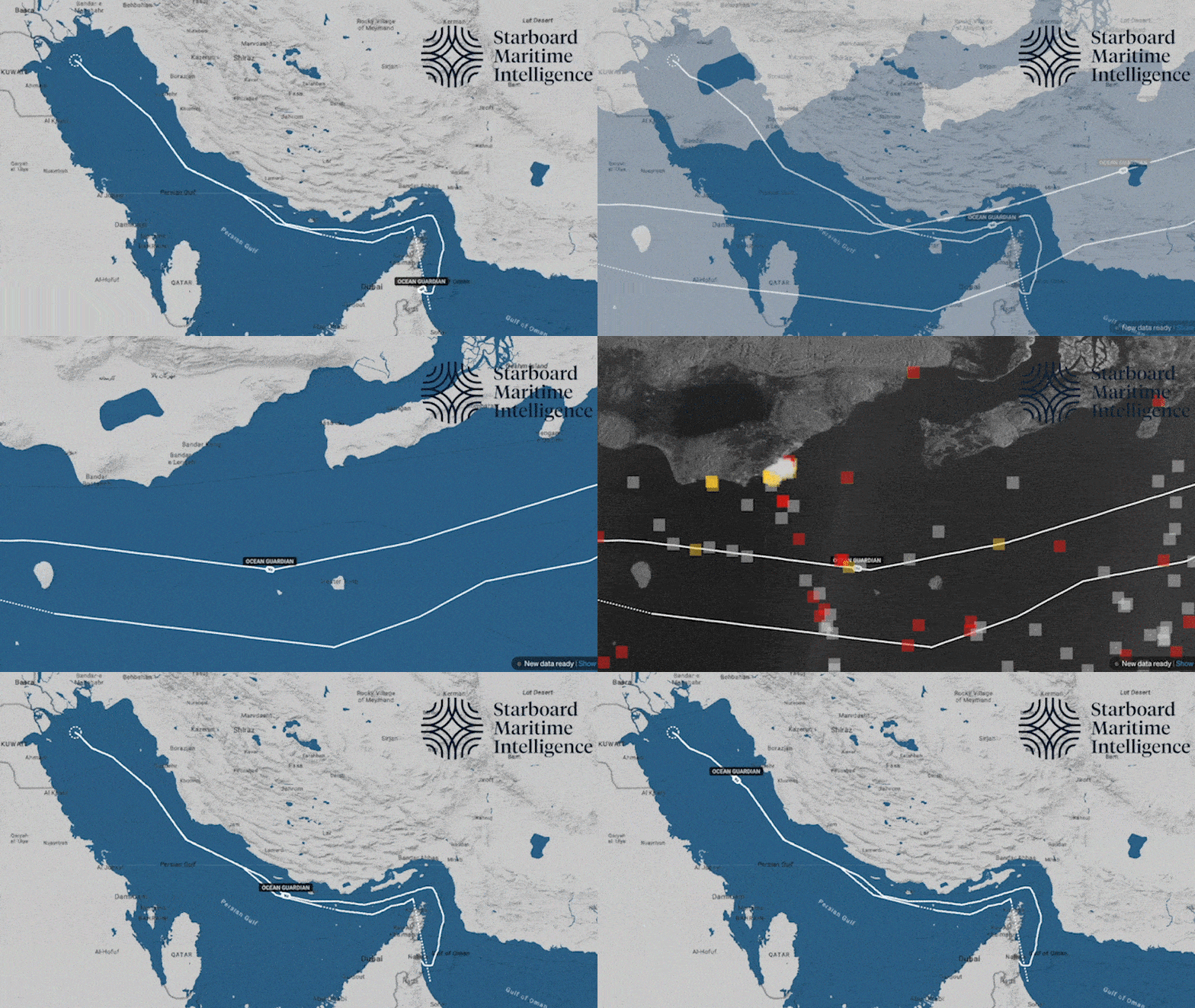
Starboard Maritime Intelligence interface showing the detected PLA(N) formation (red squares) vs. cloud cover and AIS tracks of other vessels in the area.
Using a combination of AIS data, 10-metre resolution Sentinel-2 Optical Imagery, and LLM-enhanced imagery analysis, I was able to locate and identify a PLA(N) amphibious ready group (ARG) operating in the Philippine Sea.
While the existence and approximate location of the group had been made public by Australian Deputy Prime Minister Richard Marles, Starboard Maritime Intelligence was the first to provide unclassified, open-source details of the group.
The maritime intelligence firm's analyst, Mark Douglas, said the PLA-N destroyer and the frigate would provide protection for the flotilla, and that the frigate would be "looking for submarines that might be monitoring the task group."
The company also said the replenishment vessel would be acting as a "mobile logistics hub, carrying over 11,000 tons of fuel and dry stores."
"This support effectively untethers the flotilla from shore-based ports, extending its cruising range to over 10,000 nautical miles —sufficient to transit around major landmasses like Australia without entering port," it said.
Still, Mr Douglas stressed it was not yet possible to say whether or not the flotilla was heading towards Australia.
"Intent is hard to gauge from [the images] — we can see that they're definitely going south-east," he told the ABC.
"It's a long way from there to Australia. We're working with our partners to get more imagery to determine in what direction it might be heading in the future."
In line with this reality, Mark Douglas, an analyst at the ship tracking firm Starboard Maritime Intelligence, toldThe Insider that any intensified monitoring is more likely to generate grounds for new sanctions than to stop vessels outright:
“From everything I've seen, Denmark is just going to be more closely monitoring these tankers…I don't think this announcement will see any tankers being stopped.
What seems more likely, and what I think other oversight measures have done, is provide more information to enable sanctioning on tankers and also the insurance companies that enable them.
No EU sanctioned tankers are allowed to stop at Danish ports, so the impact on those tankers is zero — they are managing to operate without Danish ports already. Maybe Denmark could ban tankers loaded in Russia from their ports, but some of those tankers (mostly Greek owned) are operating legitimately under the price cap, and I think in general it's unlikely that Denmark would ban vessels without EU sanctions to back them.
So I think these new measures are not significantly different from what's in place. If they result in more tankers being sanctioned, that should help to make the oil trade harder, but it seems unlikely that they will have an immediate difference on the trade.”
“While the US has sanctioned numerous vessels and organizations, it hasn’t stemmed the flow. Physical boarding is the next step,” said Mark Douglas, a maritime domain analyst at Starboard Maritime Intelligence. “It’s a signal that falsifying locations and documentation is no longer a shield. It’s now what makes you a target.”
Former Royal New Zealand Navy officer Mark Douglas’ interest in shipping subterfuge was piqued when he was working in Singapore and found a vessel pretending to be an oil tanker. The tanker in question had been scrapped years earlier.
“It turns out the vessel was a grab-dredger that was going over the hulk of World War 2 wrecks and pulling up scrap metal from war graves. It was nuts that somebody would do that and then try to hide it like that,” says Douglas.
Douglas now works as an analyst for Starboard Maritime Intelligence, a Wellington-based startup that has raised $23m to fuse information from transponders, satellite imagery and radar – along with vessel ownership and insurance data – to track in real-time the more than 100,000 vessels cruising the world’s oceans.
By July 2024, there were nearly three times as many tankers on the Cook Islands’ books than there had been two years prior, with many new entries among the largest vessels plying the globe’s sealanes.
Douglas said 57 of the peak fleet of 150 were suspected of transporting Russian oil in breach of sanctions, 74 doing similarly for Iran. Ultimately, nearly half of the Cook Islands tanker fleet at its peak in July 2024 has ended up being formally sanctioned by the United States, the United Kingdom, or the European Union.
“To be able to get that many vessels that quickly is pretty impressive. And the fact that a large amount of this growth ended up being vessels that were subsequently sanctioned is concerning,” Douglas says of the Cook Islands’ booming tanker trade.
Cook Islands-flagged tanker traffic in August 2024 visualised by Starboard Maritime Intelligence. The registry, managed by Maritime Cook Islands, signed up many now-sanctioned vessels linked to shadow fleets that exported Russian and Iranian oil.
Analyst Mark Douglas of Starboard Maritime Intelligence detailed possible solutions to the problem in a comment to The Insider:
“[For the Baltic states,] there are options to conduct port state inspections to find any issues with the vessel and the way it is operating, including holding all the correct insurance and paperwork for the fuel they’ve transferred. Or they could try and restrict the supply of fuel to the vessels, although that would be difficult. Both vessels are flagged in Cyprus, so they could raise it with that government. Or the countries that have sanctioned the ‘shadow tankers’ involved could look into sanctioning the bunker tankers. For instance, the U.S. has sanctioned tug boats that had been assisting with ship-to-ship transfers in Southeast Asia.”
Regarding the need for “shadow fleet” vessels to refuel in Baltic waters rather than in nearby Russian ports where they are loaded, the analyst noted:
“Some tankers can burn cargo oil in their main engines, so they don’t need to refuel. Others do need to refuel, and if you’re in port loading, it would make sense to load bunker at the same time. But there are still tankers spoofing locations to pretend they’re not going into Russian ports, and for those vessels refueling outside Russian waters might help hide their activities.”
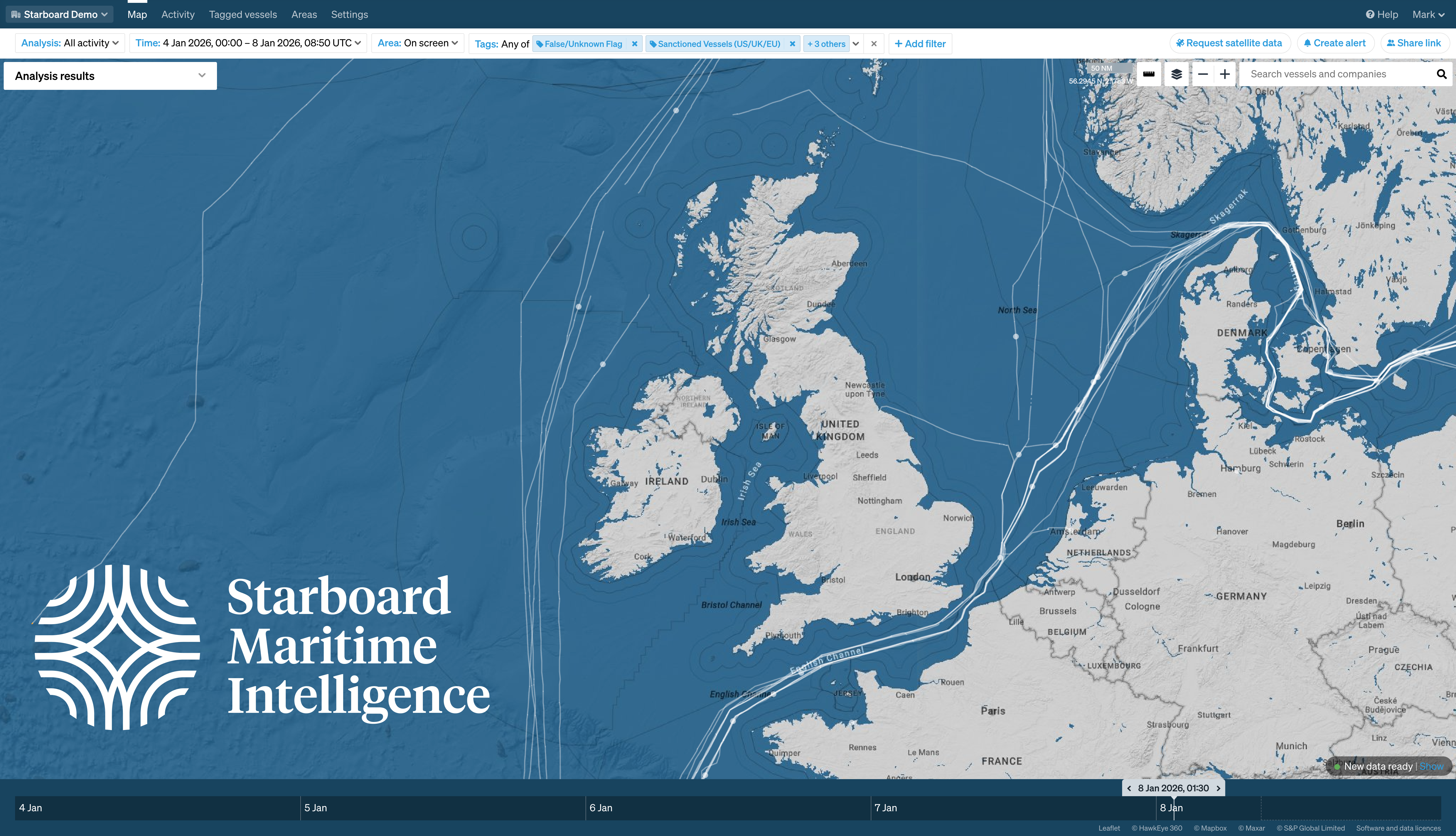
France has detained a tanker from Russia's "shadow fleet" in the English Channel, which was previously spotted off the coast of Denmark amid a drone threat.
Exclusive: Russian Naval escorts shadow fleet through the English Channel
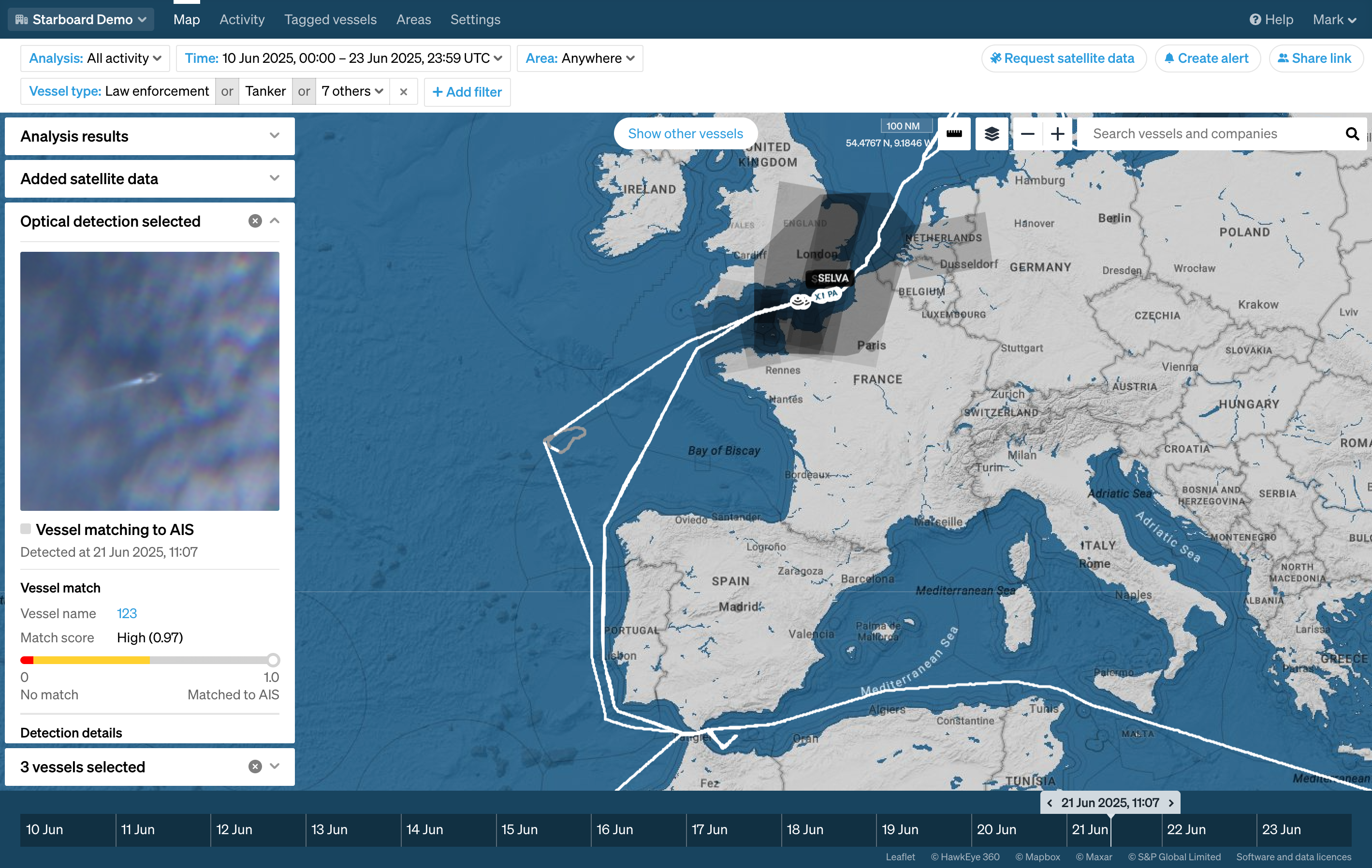
Following a tip-off from OSINT analysts on Bluesky, I identified that the Russian Navy corvette BOIKIY, which was broadcasting on AIS under a masked identity, was transiting through the English Channel with the false-flagged shadow fleet tankers SELVA and SIERRA. Further analysis confirmed that the three vessels appeared to have coordinated their movements in the weeks leading up to the transit. This allowed Starboard Maritime Intelligence to provide the first unclassified, open-source evidence of direct coordination between the Russian Navy and the shadow fleet.
The escort was first reported by Mark Douglas, a maritime domain awareness analyst at New Zealand-based Starboard Maritime Intelligence. Douglas spoke with the All Exclusive project, explaining that automatic identification system (AIS) data revealed coordinated movements between three vessels starting June 16.
The ships involved in the operation were: the Steregushchiy-class corvette Boikiy; the tanker Selva (also known under the aliases Nostos and Naxos), which is sanctioned by the UK; and the tanker Sierra (also known as the Suvorovskiy Prospekt), which is under both UK and EU sanctions.
“Their movements suggest deliberate timing to allow all three vessels to transit simultaneously, en route to load oil in Russia,” Douglas wrote.
Another "shadow fleet" vessel entered the Baltic Sea without documentation. Under the observation of a Finnish patrol, it was able to escape to Russian waters.